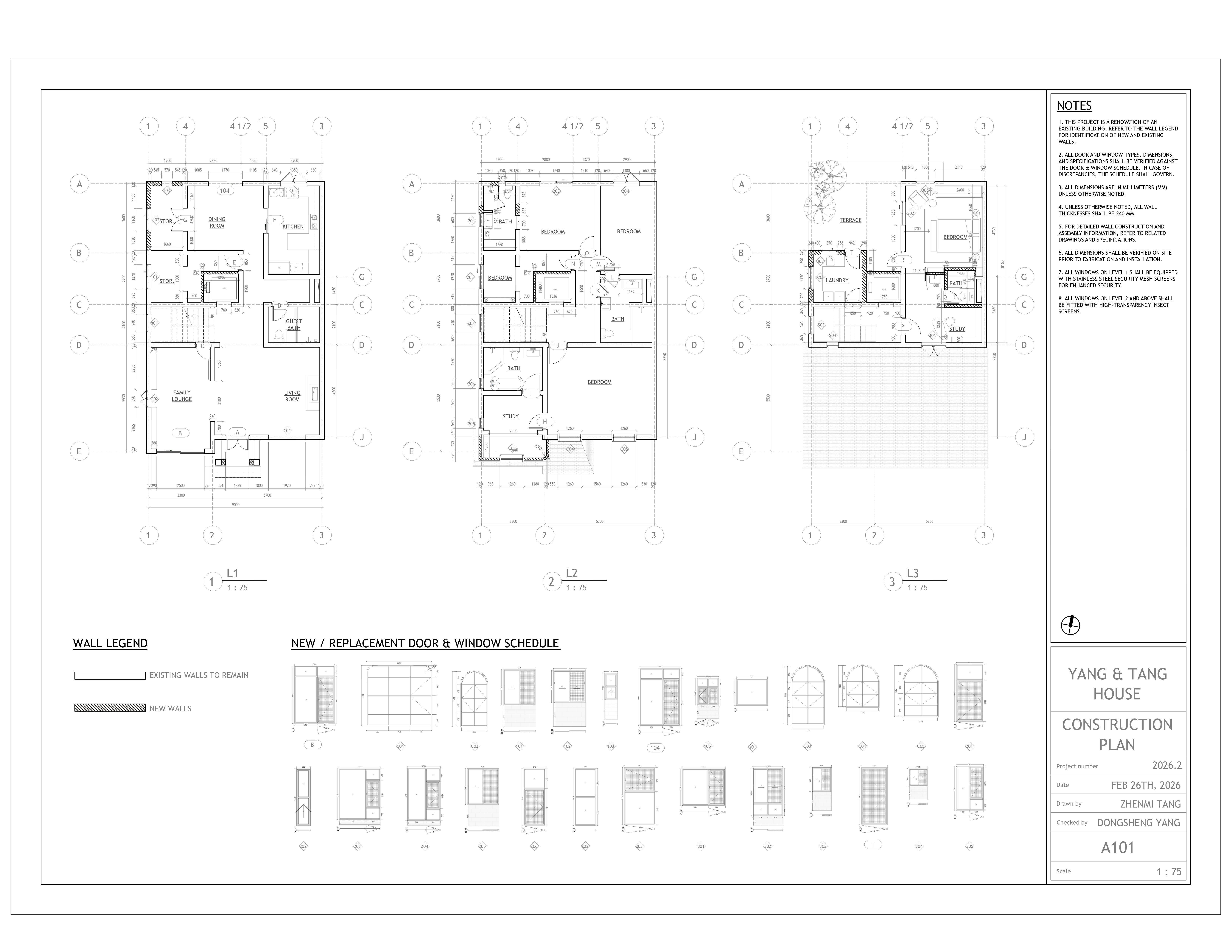
This project is the renovation of my family home in Chengdu, originally built by my father over 20 years ago. As both a structural engineer and contractor, he is now leading the construction, while I take on the role of designer.
Working within tight budget constraints and ongoing occupancy, the project focuses on rethinking the existing layout to support long-term living. The renovation introduces additional bathrooms to form multiple self-contained suites and integrates a new vertical circulation core to accommodate aging-in-place needs.
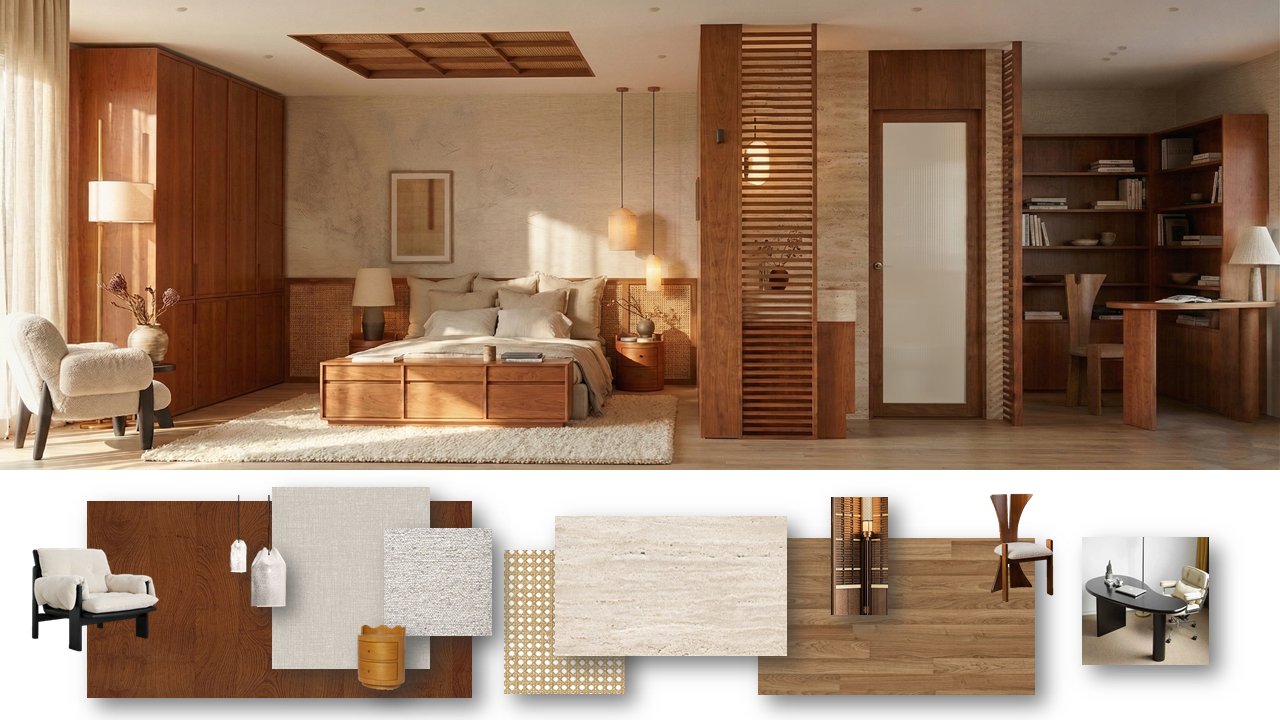
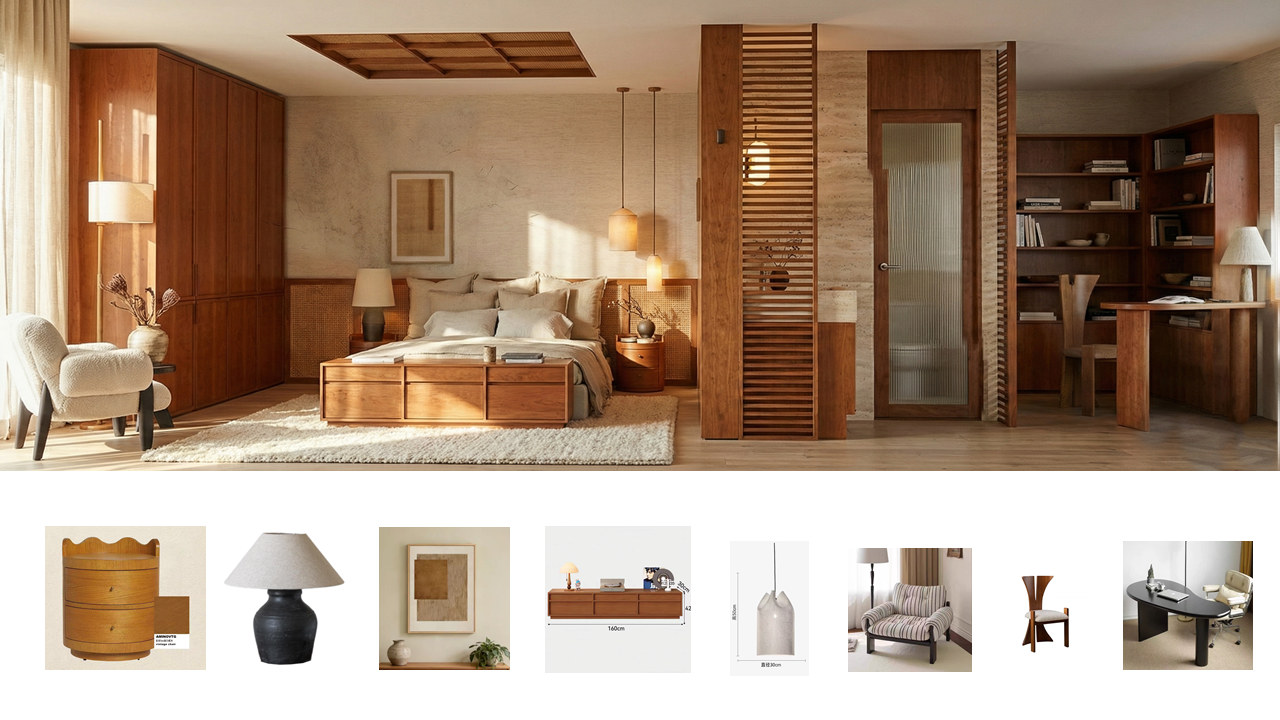
The third floor became the primary design focus. A former media room was transformed into a self-contained primary suite combining bedroom, study, and bathroom functions. Through multiple layout iterations, the design balances spatial flow, privacy, and feasibility, with FF&E selection developed in parallel to ensure cost control and buildability.
Developed using a BIM-based workflow and supported by AI-assisted design tools, the project reflects an approach grounded in both design exploration and real-world construction logic.
这是我位于成都的家的改造项目。这栋房子由我父亲在二十多年前建造,他是一名结构工程师兼承包商,在这个项目负责施工把关,而我则负责整体设计。
在有限预算和边施工边居住的现实条件下,本项目重点在于重新组织原有空间,以满足长期居住需求。改造包括增加卫生间以形成多个套房单元,并引入新的垂直交通系统,以支持未来的适老化使用。
三层空间是本次改造的重点设计区域。原有的家庭影音室被改造为集卧室、书房和卫生间于一体的套房空间。通过多轮平面推敲,最终在空间流线、私密性与实际可行性之间取得平衡,同时在设计过程中同步进行家具与材料的选择,以确保成本控制与落地性。
项目采用BIM流程进行设计与图纸深化,并结合AI辅助进行空间与软装方案的迭代,体现了一种在设计探索与现实建造之间取得平衡的工作方式。