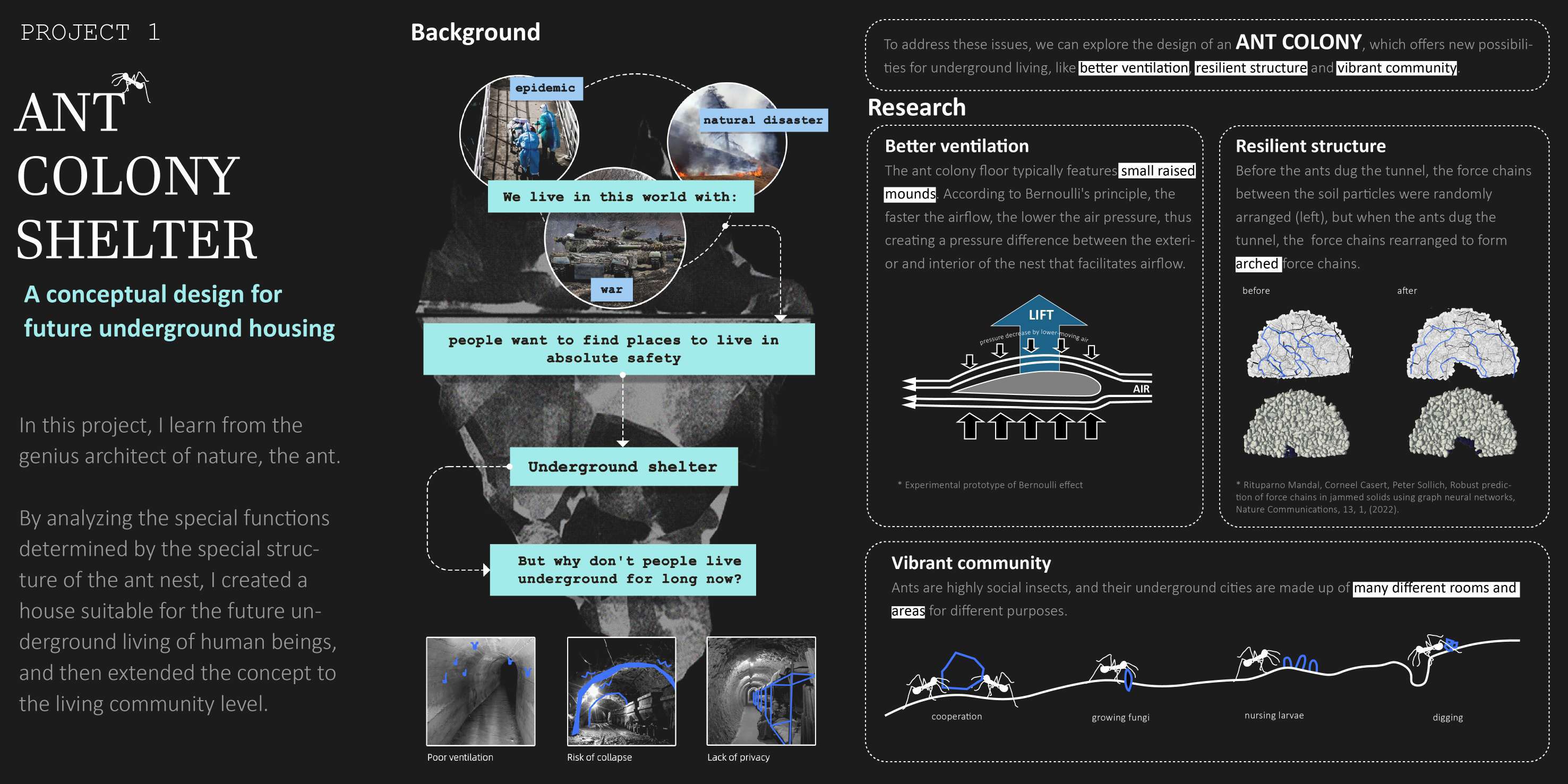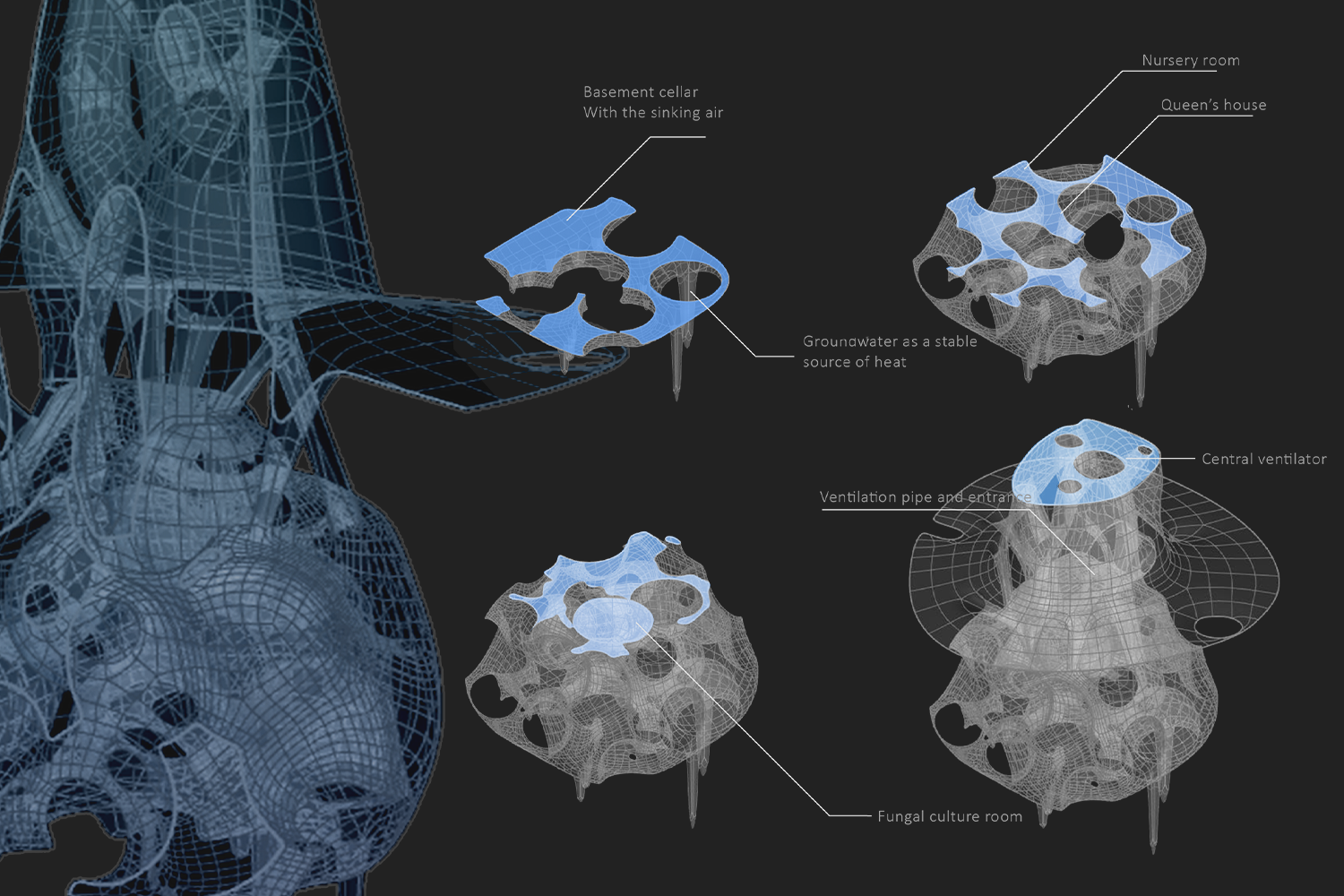
The inspiration came from videos by artist Anthill, who creates sculptures by pouring molten metal into ant colonies. I was captivated by the intricate and unique shapes of the ant nests, which felt full of charm and complexity.
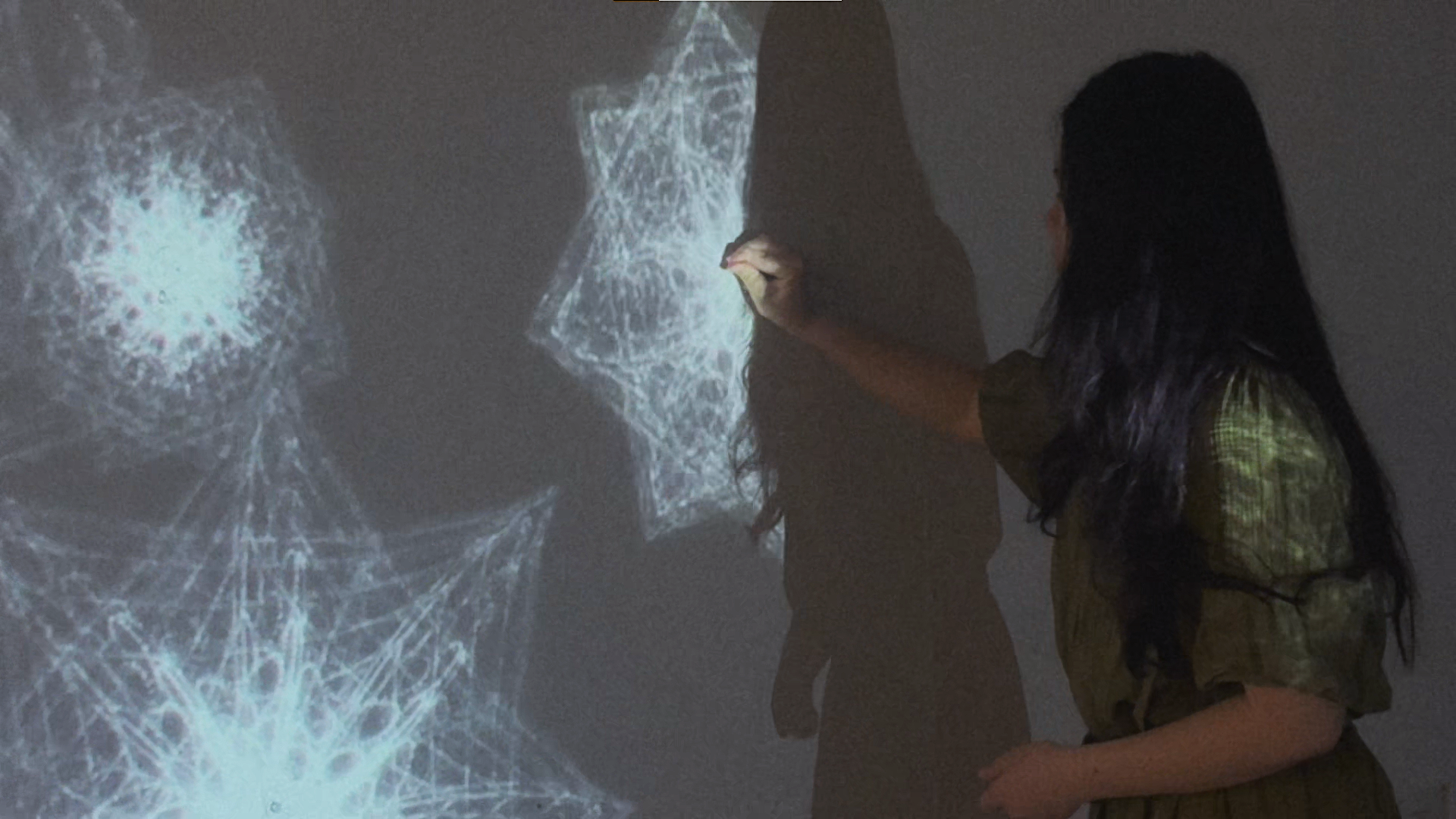
To build the model, I sculpted spaces and pathways using kinetic sand, then poured plaster into the voids. Once the plaster hardened, I removed the sand, leaving behind a cast that revealed the negative space. Starting with biomimicry of ants, I began studying the challenges humans face when living underground—such as poor ventilation, low safety, and a lack of dignity in the living environment. I eventually found direction in the book Thermodynamic Architecture.
As Louis Sullivan famously said, “Form follows function.” Ant nests' excellent ventilation, structural stability, and social functionality directly influence their porous forms, arched tunnels, and vertically zoned structures. These qualities inspired me to reimagine and adapt these elements for human living.
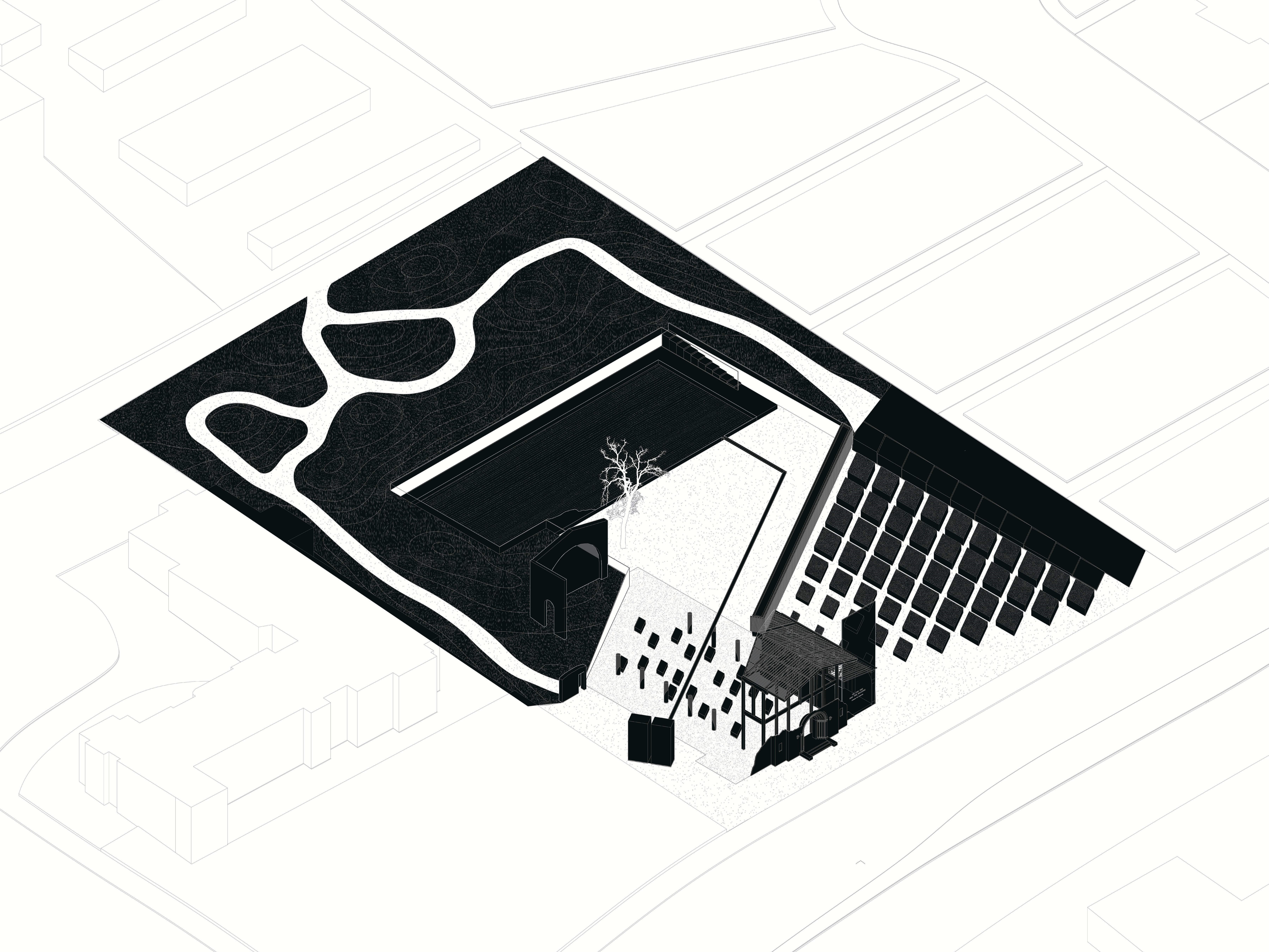
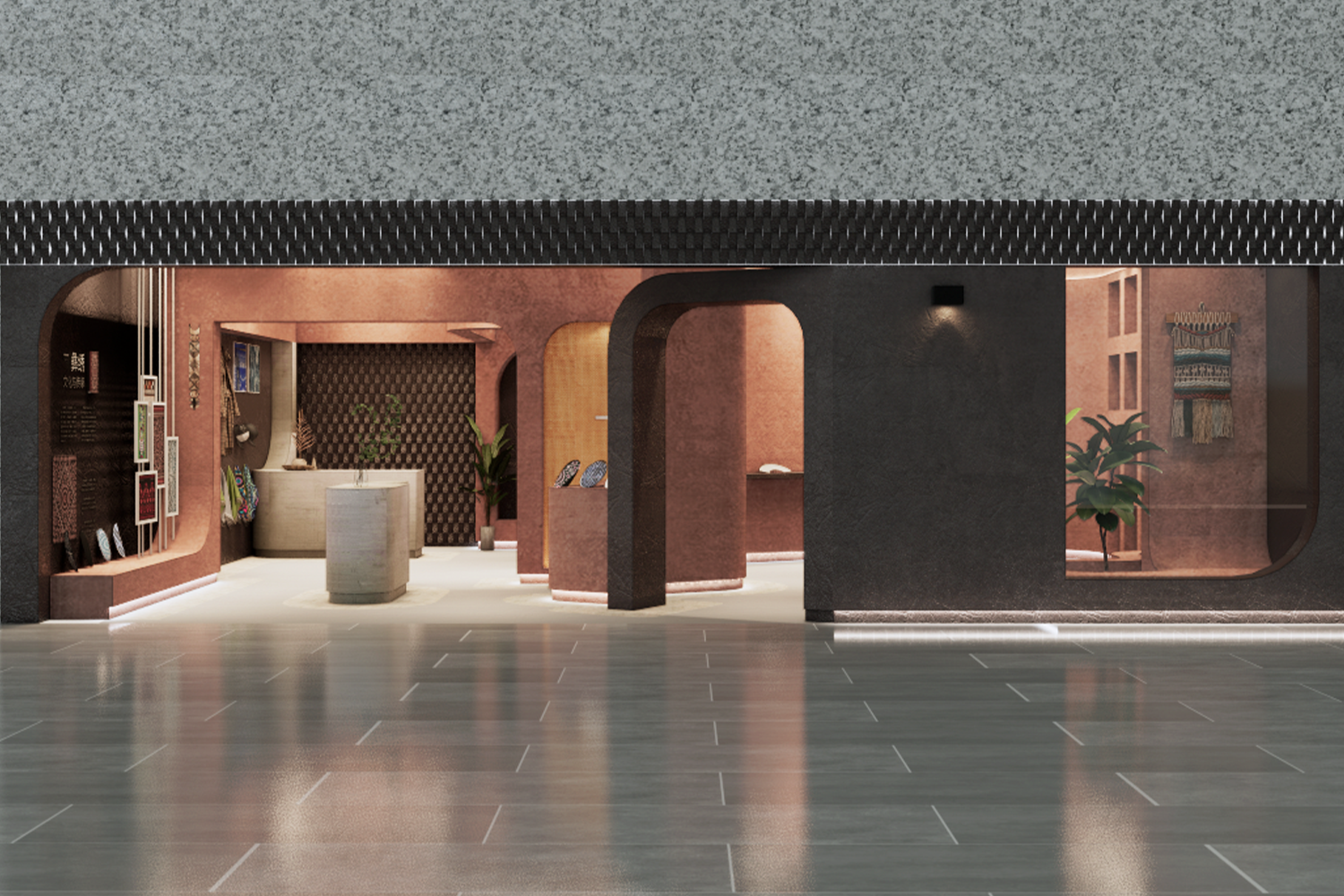
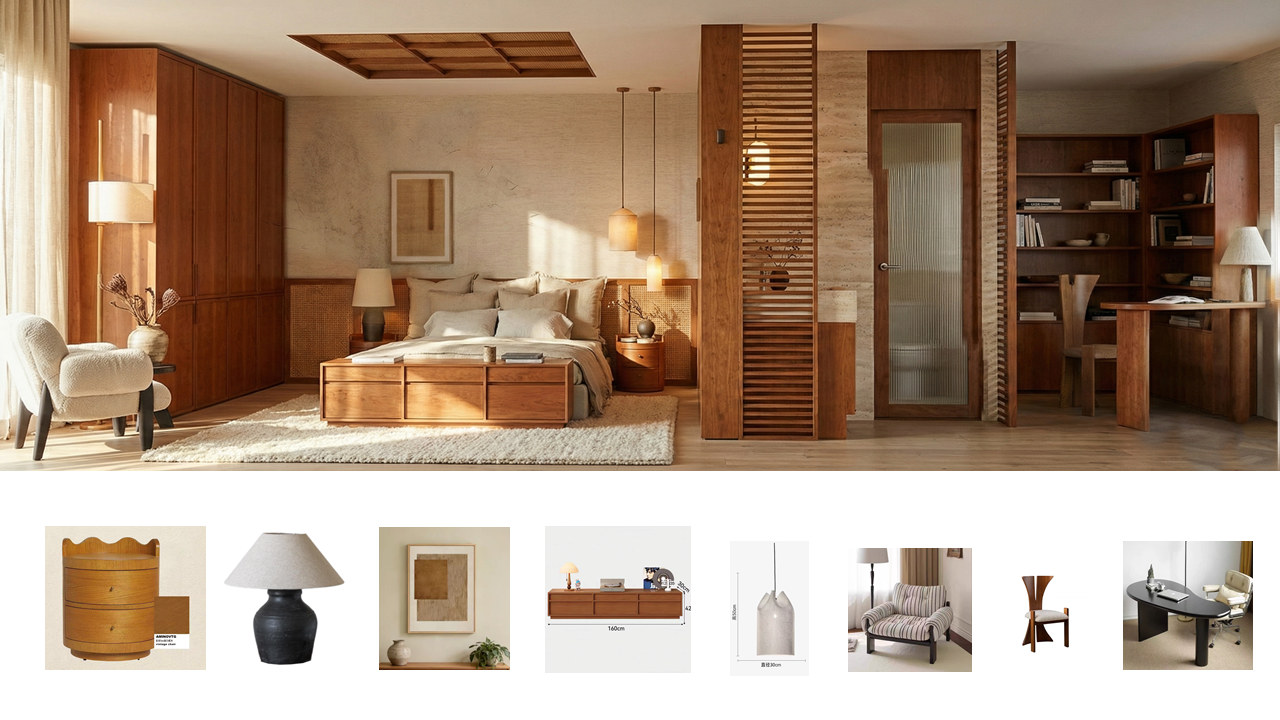
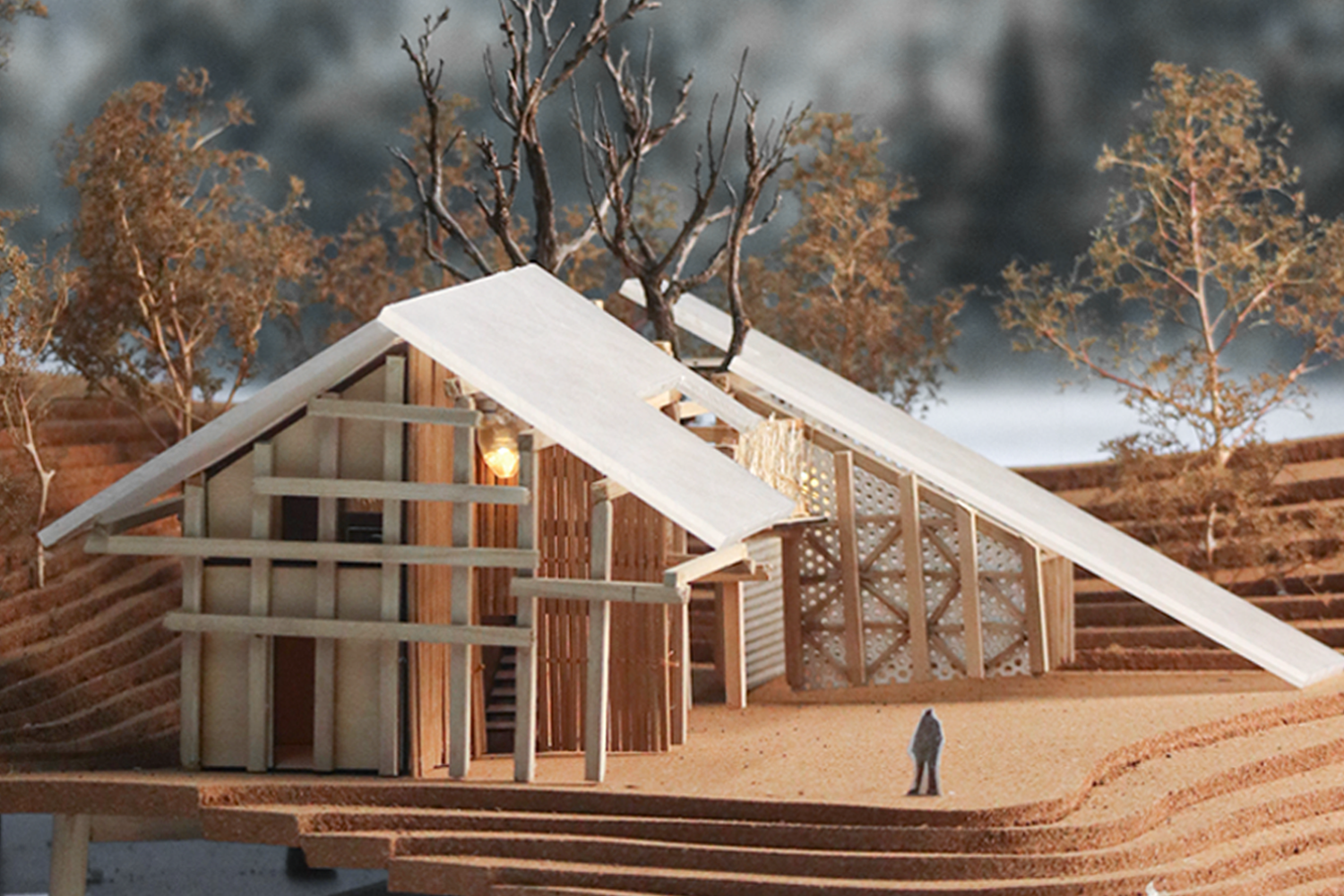
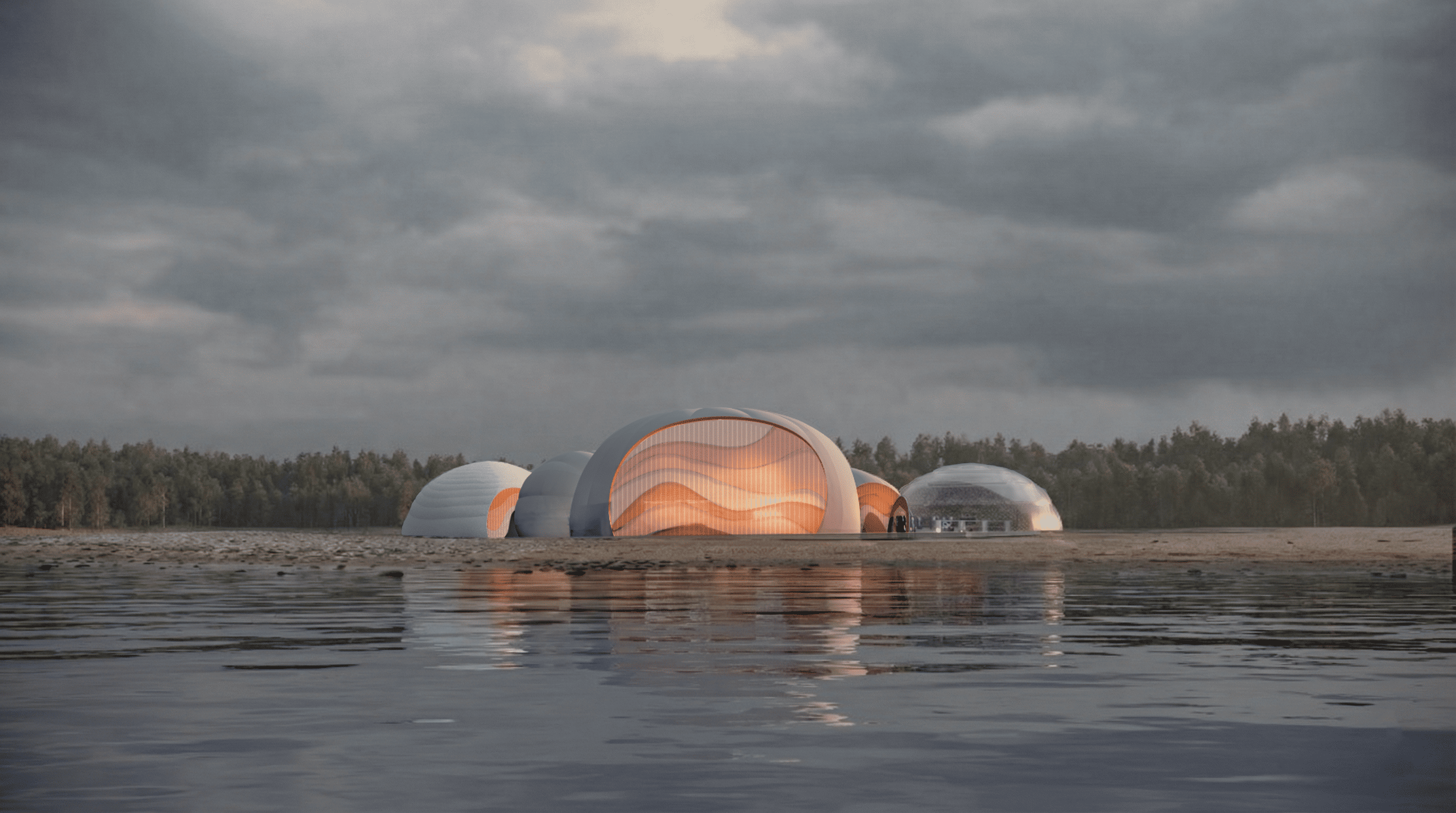
By studying these forms and refining them to meet human needs, I designed a modular underground housing system. This system aims to address future challenges like environmental degradation or overpopulation, offering a sustainable and functional solution for underground living.
这个项目的灵感来自于蚁穴浇筑艺术家Anthill的视频,我看了之后觉得蚁穴的形状非常特殊充满魅力。做模型时,我用太空沙捏出房间和通道后灌石膏,再把沙子倒出来保留石膏形成的负空间。始于仿生蚂蚁的灵感,我开始研究人类地下居住面临的困难(如通风差、安全系数低、人过得没尊严等),最后在《热力学建筑》这本书中找到了方向。正如路易斯·沙里文说的“形式追随功能”,蚁穴的通风性、结构稳固性、以及社群活跃性等等值得学习的优点,也塑造了它们多孔性、拱形隧道、垂直分区的独特造型形态。通过对这些造型元素的学习和人居需求的适应性改良,我设计了一套合理的模块化地下住宅,以应对未来可能出现的地面环境恶化或者人口爆炸的问题。